How Tattoo Booking Changed Before and After Instagram

From studio visits and word of mouth to Instagram DMs: discover how tattoo booking has changed for artists and clients.
Finding a tattoo artist used to require a little more effort. You might ask a friend about their tattoo, walk into a studio, look through printed portfolios or discover an artist at a convention.
Today, you can explore hundreds of portfolios from your phone. Instagram has changed how people discover tattoo artists, compare styles and make contact.
But has it actually made booking a tattoo easier?
For clients, finding an artist has become more accessible. For tattooers, however, the process of turning an enquiry into a confirmed appointment has become a different kind of work.
Before Instagram: finding an artist in the real world
Before social media, personal recommendations played an important role in finding a tattooer. People often discovered studios through friends, local communities, magazines or simply by walking past a shop.
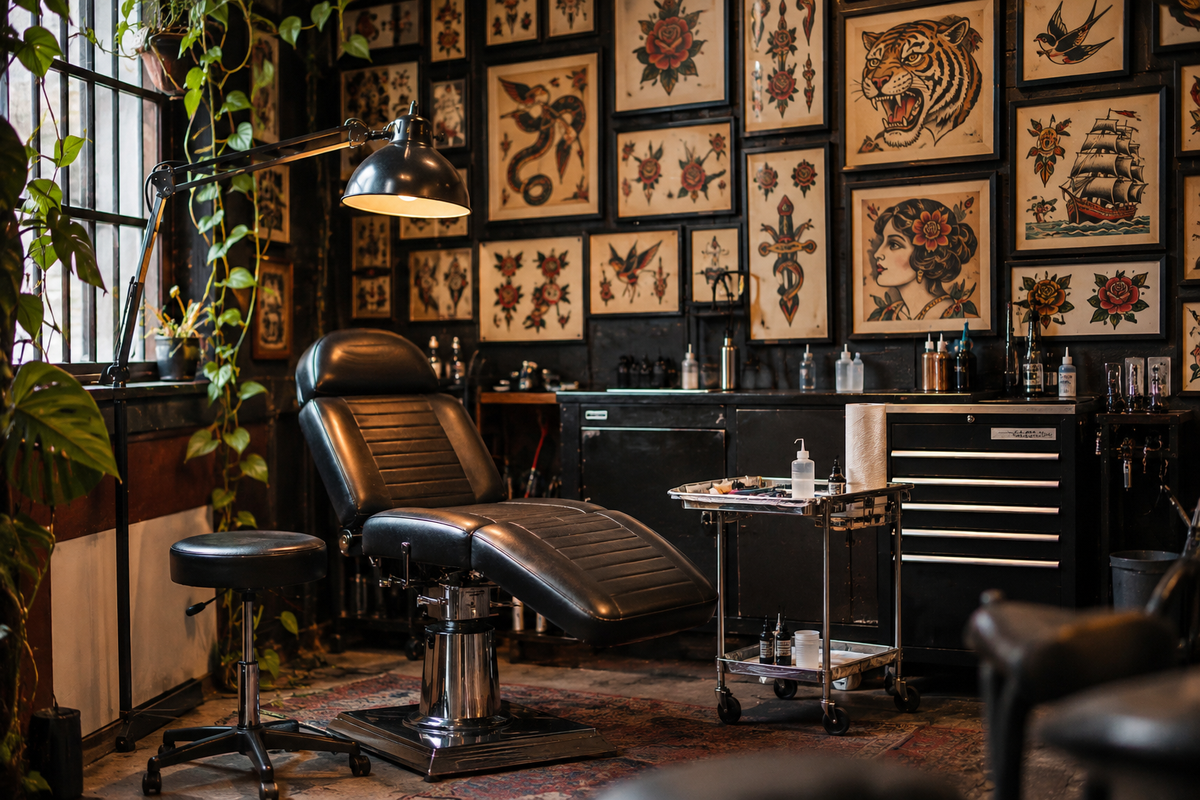
Inside the studio, portfolios and flash sheets helped clients understand an artist's style. Flash designs were displayed on walls or collected in folders, giving customers visual references and artists a way to present their work.
Historical collections show how important these materials were. The Henry Ford, for example, preserves a collection associated with tattoo artist Percy Waters, including hundreds of original flash paintings from the early twentieth century.
Tattoo conventions also offered an opportunity to discover artists, meet other people in the scene and see different approaches to tattooing. Researchers Sebastiano Benasso and Luisa Stagi have studied them as spaces of belonging within the tattoo community.
The process was more physical and local. Finding the right artist could take time, but the interaction often started with a conversation rather than a direct message.
Instagram turned portfolios into public galleries
The internet had already started changing how tattoo artists presented their work. Websites and online galleries allowed artists to reach people outside their immediate area.
Instagram accelerated that change.
Instead of updating a portfolio occasionally, artists could publish new work every day. Clients could follow their favourite tattooers, save references, compare styles and discover artists in other cities or countries.
For someone looking for a specific style, this was a major shift. Finding a fine-line artist, a blackwork specialist or someone working in Japanese traditional tattooing no longer depended entirely on local recommendations.
Researcher William Ryan Force explored this transformation in his academic study Tattooing in the Age of Instagram, examining how the platform influenced tattoo artists' portfolios, promotion and professional practices.
Instagram did more than give tattooers another place to advertise. It changed how their work was presented, discovered and evaluated.
What clients gained
The biggest advantage for clients is access.
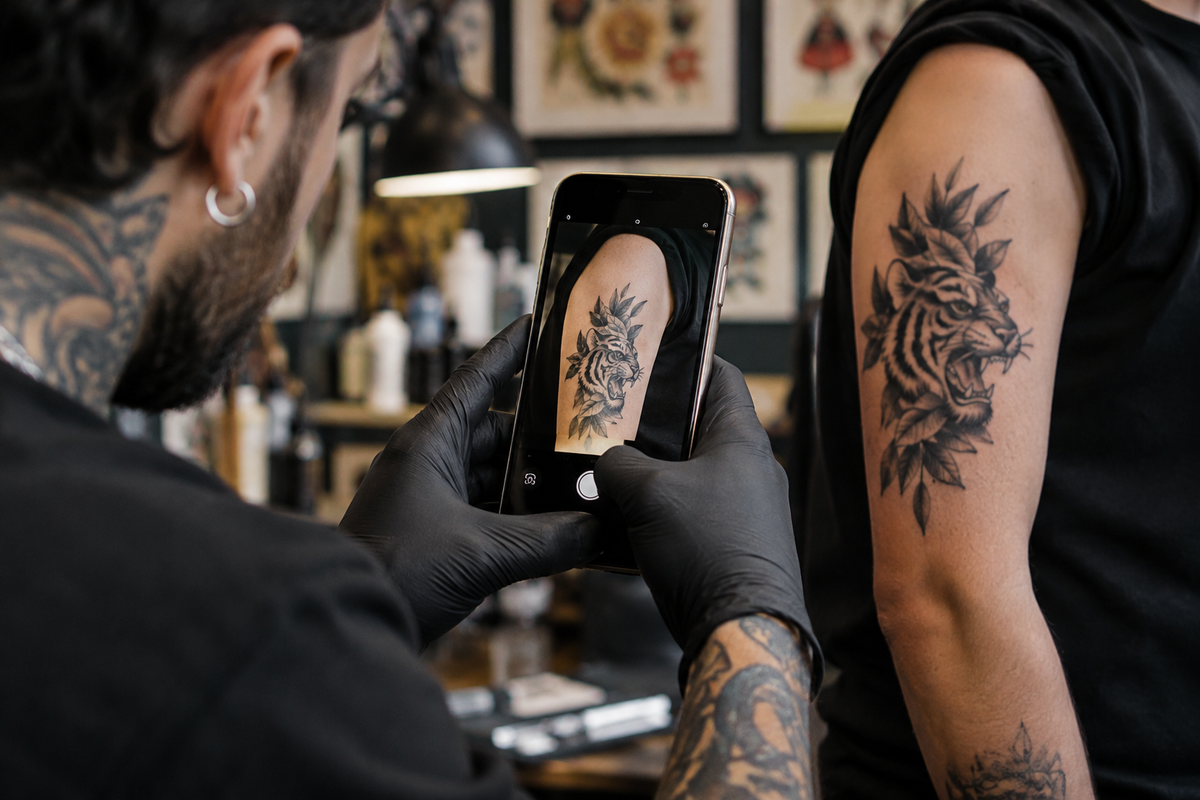
You can compare artists before contacting them, explore different styles and see a larger body of work. You can also discover tattooers who specialise in a particular technique instead of choosing someone simply because their studio is nearby.
Contact has become easier, too.
A client can send a message with an idea, reference images, placement and approximate size. They can ask about availability without having to visit the studio first.
This makes the first step less intimidating, especially for people getting their first tattoo.
But there is one thing worth remembering: a popular Instagram account does not automatically mean an artist is right for your project. Followers and likes cannot replace experience, technical ability or a portfolio that consistently demonstrates the style you want.
What tattoo artists gained, and what became harder
For tattoo artists, Instagram opened the door to a much larger audience.
An artist working in a specialised style can now reach clients beyond their city. They can announce guest spots, share available flash, show healed work and maintain a connection with previous customers.
However, the same platform that displays the portfolio also receives the enquiries.
A typical working day might include answering a new tattoo enquiry, checking reference images, discussing size and placement, explaining a deposit, confirming a date and following up with another client.
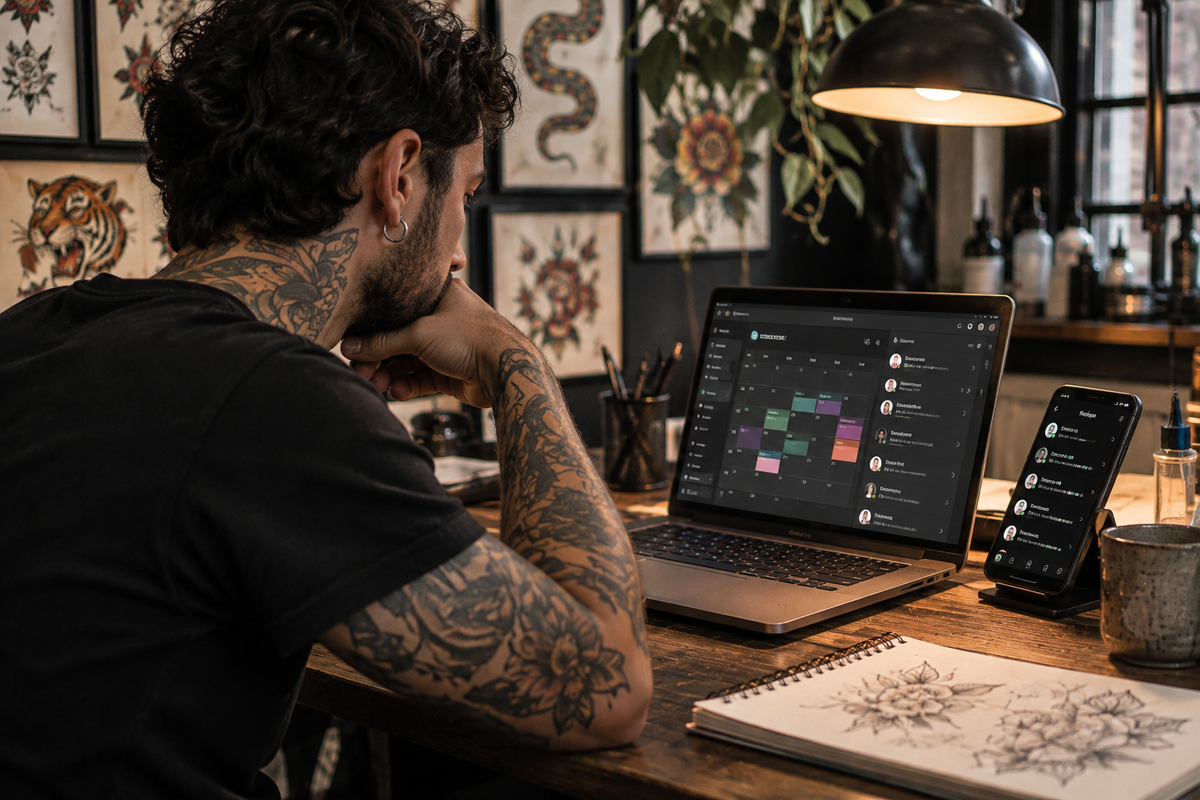
These conversations can happen across Instagram, WhatsApp and email. Important information gets scattered between different chats, and artists have to remember which client is waiting for a response or which appointment still needs confirmation.
The issue is not that clients ask questions. Consultation is part of tattooing. The problem is that managing all those conversations takes time away from drawing, tattooing and other studio work.
The future of tattoo booking is not another DM
Going back to paper portfolios and phone calls is not the answer. Digital platforms have made tattooing more accessible and helped artists find clients who genuinely connect with their work.
But discovering an artist and booking an appointment are two different things.
A good booking experience should make it easy for clients to explain their ideas and understand the next steps. Artists should be able to keep track of enquiries, appointments, deposits and client information without having to search through multiple conversations.
That is what we are building at Inklou: booking, payments and client communication in one organised workflow for tattoo artists. And with InklouMatch, clients can explore ideas, find a verified tattoo artist and book with a deposit.
Instagram changed how people find tattooers. The next step is making the booking process work just as well.
Sources
Kristen Gallerneaux, "An Artist with the Needles," The Henry Ford, 2014. https://www.thehenryford.org/collections/explore/articles/tatoo-history-at-thf
William Ryan Force, "Tattooing in the Age of Instagram," Deviant Behavior, vol. 43, no. 4, 2022, pp. 415–431. https://doi.org/10.1080/01639625.2020.1801176
Sebastiano Benasso and Luisa Stagi, "Getting Inked at a Tattoo Convention: Subjectivity and Belonging within an Alternative Cultural Heterotopia," Italian Sociological Review, 2021. https://doi.org/10.13136/isr.v11i3.492